

The Predictable Prediction Crisis
The risks of being able to bet on anything, anytime

One of the things that makes a good crisis comms person is being able to imagine bad situations. The benefit is that you can envision possible scenarios and plan accordingly. The drawback is that you will be a downer at office holiday parties.
Everyone: Merry Christmas!
Me [scrolling Bluesky]: Hey, have you seen how many people get violently sick from bad eggnog?
Everyone:…
Me: Noël! [Dumps eggnog back into punchbowl]
If you’re going to prepare for crisis communication, you need to be able to have frank discussions about the possible crises. Death. Crime. Disasters. Whatever. Does it seem silly to prepare for a global pandemic that shuts everything down for a while? Guess what!
There is an infinite number of bad scenarios, you can’t prepare for everything, and not all risks demand the same degree of preparation. There is a simple matrix that comms people (and our friends in risk management) sometimes use to think through which scenarios we should be spending time on:
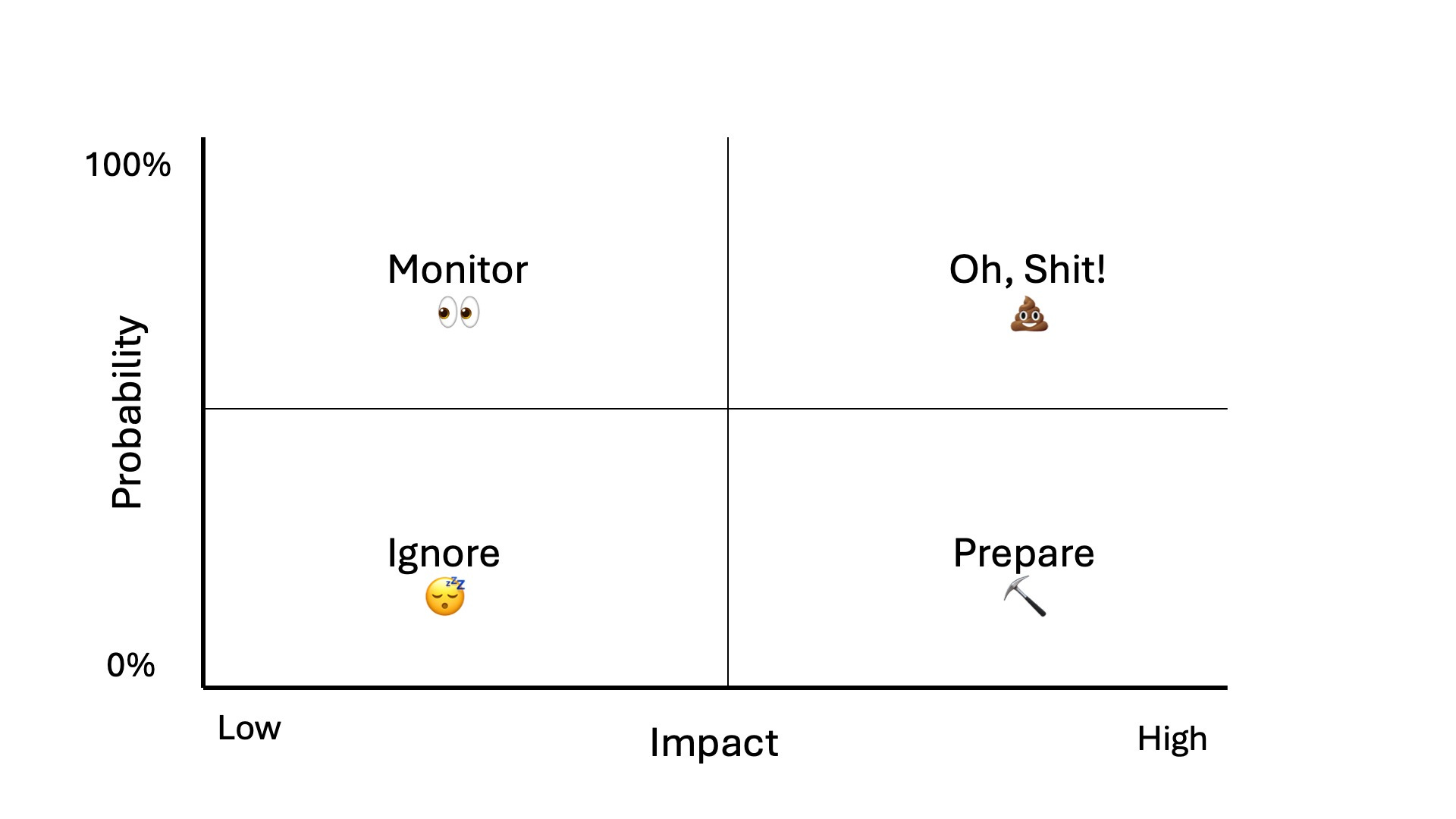
Obviously, this is oversimplified. “Probability” is timeline dependent and “impact” is contingent on various assumptions. You’re not so much plotting points as little clouds. People will argue about where in the matrix to place things. Sometimes they’ll argue for motivated reasons, like protecting a revenue stream. That’s another risk!
But it’s a useful heuristic. Alien invasion? High impact! Vanishingly small probability. Don’t worry about it. If it happens, no one will blame you for not having a comms plan and your boss will be too busy fleeing to his luxury bunker in Big Sur with a suitcase full of ketamine to give you a hard time.
The landscape is always changing and risk maps are dynamic. Two years ago, tariffs weren’t a major consideration. Today they are. What fun! We’re always assessing new risks, or considering what might be causing current risks to shift their position on the matrix.
Often, you’re just tweaking the map. This or that risk becomes incrementally more likely or potentially more damaging, so you move the plot a few pixels. But occasionally something novel sprouts on the map like a poisonous mushroom. The thing that made me realize there is a shift in the risk landscape was this tweet from NBA star Giannis Antetokounpo, a few weeks ago:
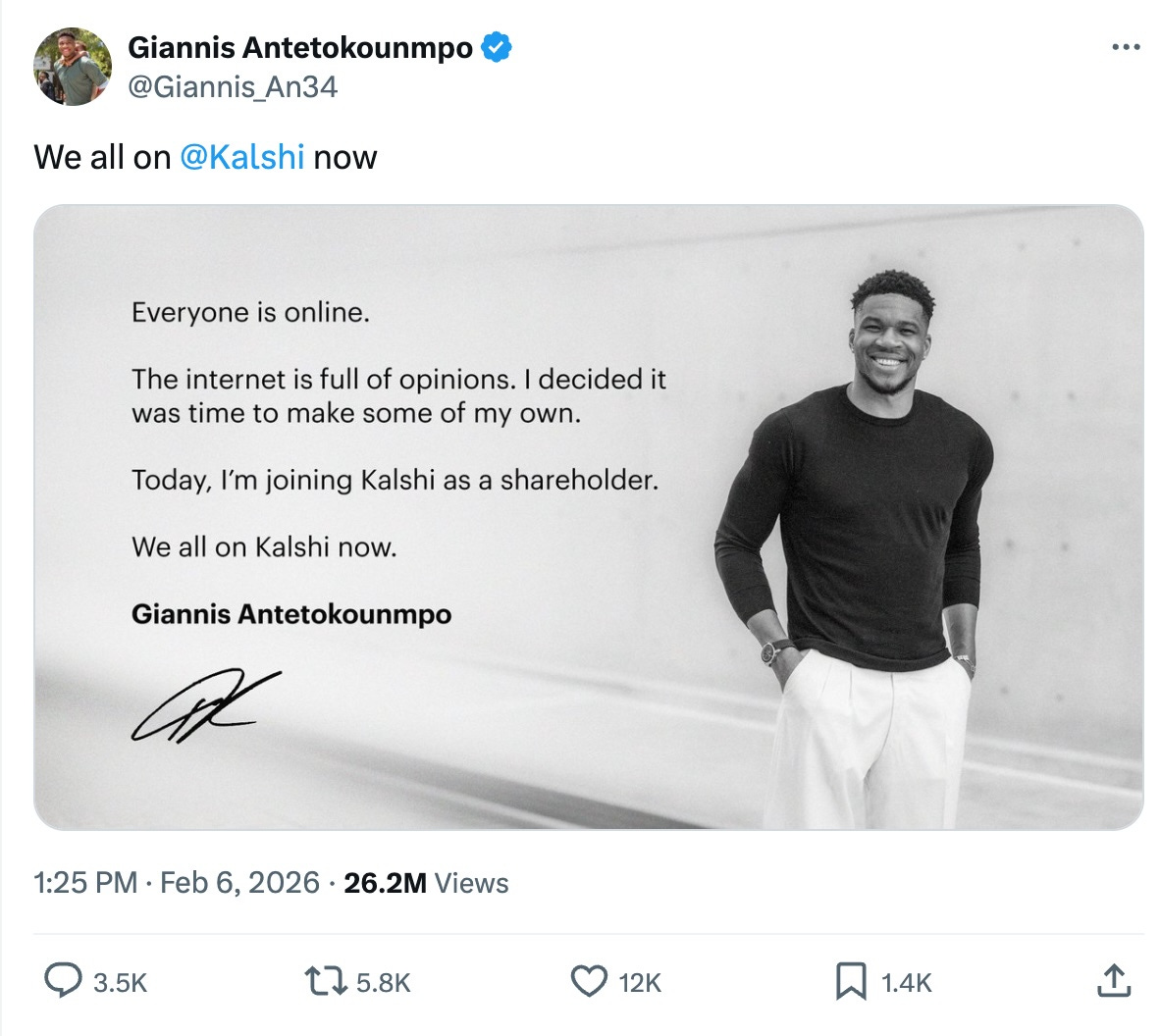
We not all on Kalshi, Giannis!
Giannis’ investment prompted reasonable questions, but maybe it will be fine! When has the collision of sports and gambling ever been a problem? And between the two main prediction markets, Kalshi is the sober option, as amazing as that is.
But a current star player becoming an investor in a lightly regulated prediction market app seems like hurdling the Rubicon and landing in brand new risk territory much broader than sports. Since that tweet, things have got weirder as the prediction markets have been implicated in several “insider trading” events and novel controversies: 1
An anonymous account on Polymarket made suspiciously timed trades on the capture of Nicolas Maduro in Venezuela that netted more than $400,000.2
OpenAI fired an employee for trading on confidential information on Polymarket.
Kalshi banned and fined an editor for mega-YouTuber Jimmy “Mr. Beast” Donaldson for betting on planned stunts he had knowledge of and a California gubernatorial candidate for betting on his own candidacy.
Mystery bettors on Polymarket seemed to have the inside track on the start of American bombing in Iran. $529 million was wagered in total and six suspiciously new accounts cleared a million each with uncanny knowledge of the timing.
Two Israeli reservists were arrested for using classified information to place bets on Polymarket.
Listed companies have always had insider trading risk. But the domains of insider knowledge that mattered were relatively constrained: financial results, major transactions, other material corporate developments. Such information is also often restricted to specific teams or departments. Venues for trading on that knowledge were also limited and tightly regulated, at least in the U.S.
The prediction markets explode the available domains for insider trading to literally anything you can imagine about any organization. Executive hiring and firings, layoffs, product decisions and sales, whatever. This includes governments. Want to bet on the monthly jobs report? The next Fed interest rate change? Any particular policy being implemented? War is apparently great for insider trading!
At the same time, prediction markets have reduced the friction of betting on these things to approximately zero, in the same way that sportsbook apps reduced the friction of sports betting to zero. This moves insider trading risk way up the “probability” axis on the matrix, and plops it like a seagull turd onto the risk maps of organizations that aren’t publicly listed.
There is also a second-order effect, in that the prediction markets can incentivize behaviors that lead to payoffs. If you can place an anonymous, crypto-backed bet on outcome X, and you have direct control, or just influence, over outcome X, you have a potential conflict of interest. Bad incentives and low friction are a dangerous combination. With some of the prediction markets offshore, crypto-based, and having apparently squishy know-your-customer requirements, opportunity just a VPN away.
Will people do this? I don’t know! Is it a risk? I think so! As we’ve established, I am professionally disposed to imagine bad outcomes! I think there are going to be some amazing corporate and government crises rooted in these markets. Time to update those risk maps!
Respectability Before the Storm
The prediction markets are working hard to build a veneer of respectability. Their communications emphasize particular language: “markets,” “traders” (not gamblers!), “contracts” (not bets!). They’re just like derivatives trades on regulated exchanges! Or, that’s the idea. They speak in the language of truth and discovery. Here is Kalshi CEO Tarek Mansour in Wired this month:
“[Kalshi users] have found an exercise that is intellectually stimulating, that gets them more calibrated and objective about their views about the world, where the conversation is more like mathematics. It makes things less subjective and more objective. It depolarizes the conversation, and it helps us get to more truth.”
Polymarket published the following notice on the page for the bet on when the U.S. would initially strike Iran:
Note on Middle East Markets: The promise of prediction markets is to harness the wisdom of the crowd to create accurate, unbiased forecasts for the most important events to society. That ability is particularly invaluable in gut-wrenching times like today. After discussing with those directly affected by the attacks, who had dozens of questions, we realized that prediction markets could give them the answers they needed in ways TV news and 𝕏 could not.
Honey, I’m not gambling! I’m harnessing the wisdom of the crowd to create accurate, unbiased forecasts for the most important events to society! I’m performing a public service! Also, I lost the tuition money, sorry.
What are the most important events to society? I’m glad you asked:
Last month, Kalshi published its first “notices of disciplinary action” against users, which is how the Mr. Beast and California gubernatorial candidate cases became public. That document is a good place to see Kalshi’s language choices in action. The violation is “trading on material, non-public information,” which is the SEC definition of insider trading. The document looks like an SEC enforcement notice, down to being released as a PDF and carrying a document number. But it’s not a regulatory action. It’s Kalshi’s own enforcement of its terms and conditions done in a manner designed to look regulatory in nature.
The Commodity Futures Trading Commission is the actual regulating authority for prediction markets in the US. They’ve noted Kalshi’s enforcement actions, while reserving the “full authority to police illegal trading practices occurring on any [Designated Contract Market]”, which includes prediction markets. It will be interesting to see if and when they feel the need to assert themselves. So far they are taking a light touch.
Meanwhile, one advantage of being regulated as a futures market rather than a gambling app is that you can operate in all fifty U.S. states and promote yourself relentlessly to people under the age of 21 because college students are famously prudent.
It’s smart of Kalshi and Polymarket to make themselves as respectable as possible while they can. There have already been some scandals, and I think more and bigger ones are in the wind.
When I talk to students about crisis comms, I will often present a scenario and then ask, who is this a crisis for? The point is that there are generally multiple stakeholder groups in a crisis, and the crisis can hit them all in different ways. If a CEO engages in termination-worthy bad behavior, that’s a crisis for the company, but it’s a different crisis for the CEO. PR people have to know which crisis they are working on.
When the really incandescent prediction market crises happen, that will be a crisis for the organizations and people directly implicated. But it might also be a big crisis for the prediction markets themselves. Will they build enough respectability to insulate themselves before that happens?
Seems like a good question for a prediction market.
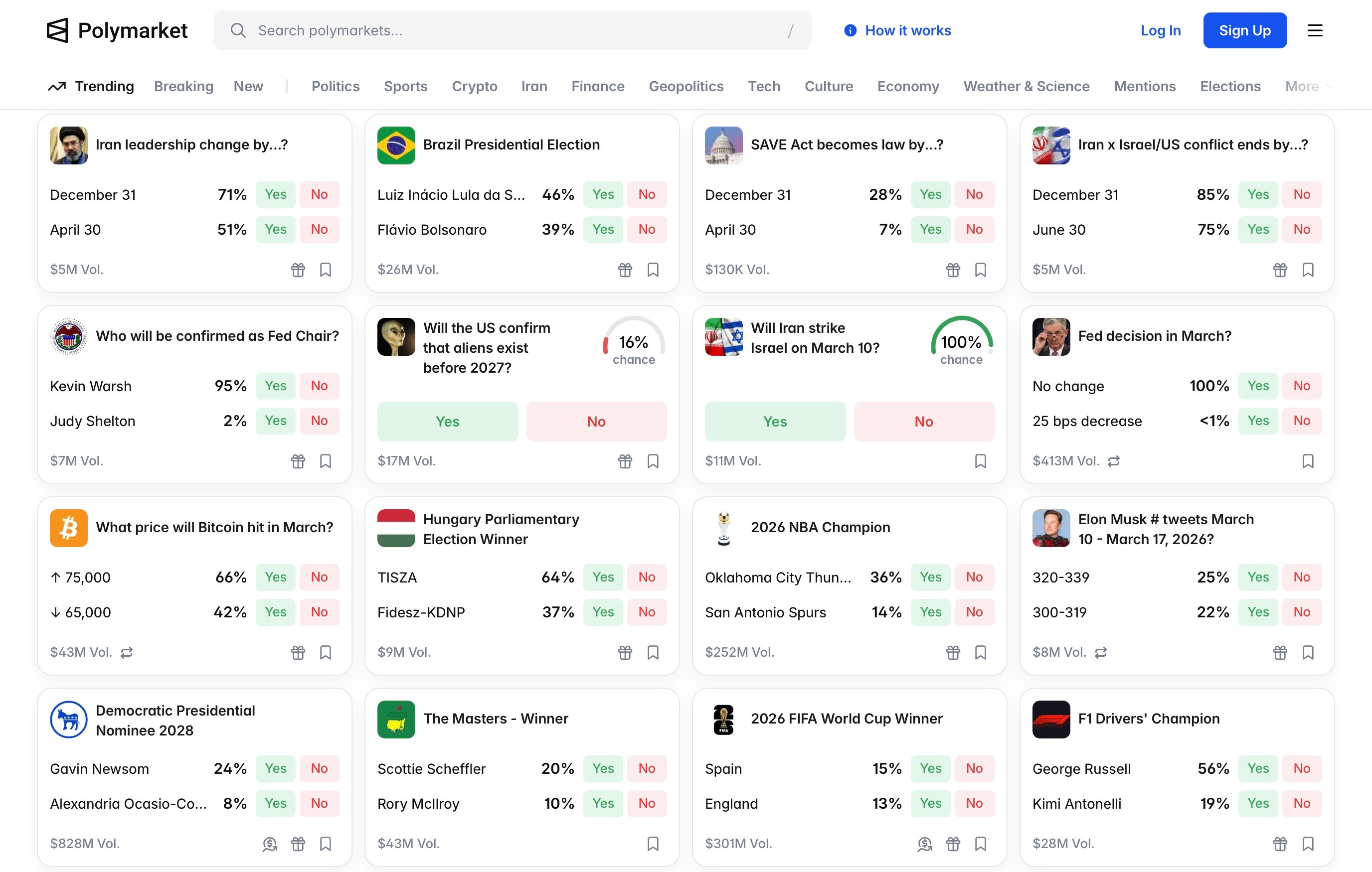
It took me a while to finish this post because the news was moving faster than I could write.
I added this example after initial publication of this post. Don’t know how I forgot about this one!
I recently learned the percentage of people who gamble now, especially the younger half of the population, and it is stunning. As a longtime spendthrift, I just don't get it. As a Philip Tetlock fan, the veneer of the prediction markets makes me laugh. :)
Thanks for writing about this blight. How soon till elementary schools are required to make students place bets on these apps, likely one particles owned by the Trump crime family?