

Black or White
How hard should we cancel the Michael Jackson biopic?

I was in high school in 1982 when Michael Jackson’s Thriller came out. Those were the days of national monoculture, and that album was the aural equivalent of chewing gum on your shoe. It was in cars, in malls, in the 7-11 while you were getting a Slurpee, just impossible to ignore. People forget that “Michael or Prince?” was a national debate during Reagan’s first term.
The videos for “Beat It,” “Billie Jean” and “Thriller” were credited with breaking the “color barrier” on MTV, which was barely a year old and a new taste-making force in pop music. Seven of the nine tracks on Thriller were top-ten hits and the album was number one on the Billboard charts for 37 weeks. Michael Jackson, 24 years old but nearly two decades into his pop-music career, reached celebrity escape-velocity and became the King of Pop™.
Jackson’s life story is fascinating. Molded into early celebrity by a domineering father, he appeared to spend much of his life in arrested childhood. Neverland Ranch, Bubbles the chimp, his extreme cosmetic surgery and progressive de-blackification, his masked kids. A troubled late-career shadowed by debt, drug abuse, deep eccentricity and several credible allegations of child sexual abuse, most famously covered in the 2019 documentary Leaving Neverland.1 Finally, death at 50 from a drug overdose on the eve of a series of comeback concerts in London. Fertile territory for a biopic on race, celebrity, sexual pathology and the cost of fame!
Alas, that is not the biopic you’re going to get. The biopic you’re going to get is Michael, and it is reportedly on track to be a monster hit. But the movie elides all that late-career complexity and ends with Jackson’s triumphant concert at Wembley in 1988, when he was still on the rise and before any troubling child sexual abuse allegations.
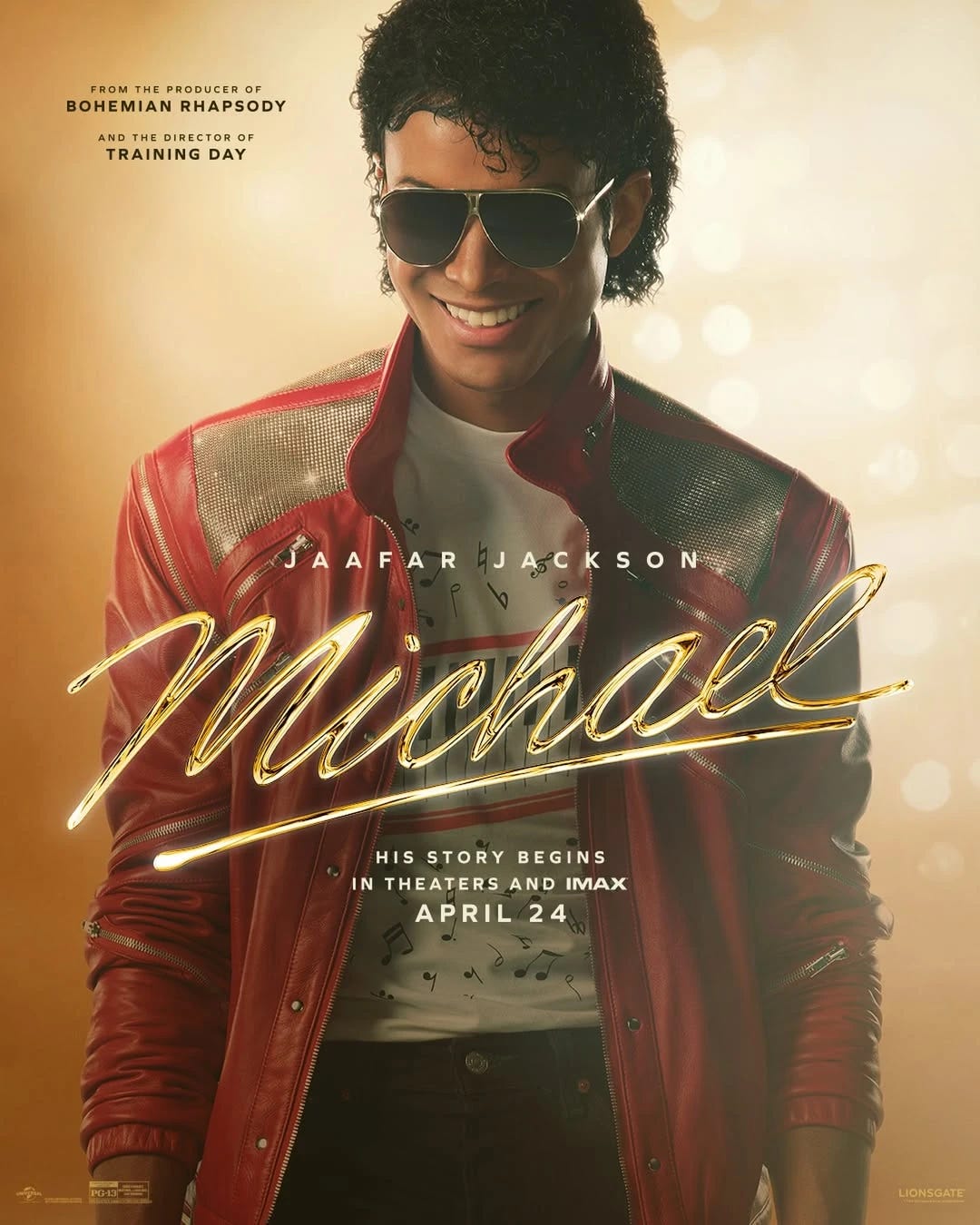
This is standard stuff for a musical biopic. You need cooperation from the artist or estate to get life and music rights, so rough edges get sanded off and personality defects are depicted as the necessary price of genius. The reviews for Michael reflect the typical mediocrity of these movies. Hagiography is boring, even with a banging soundtrack.
But Michael isn’t just the standard-issue celebrity glazing. The movie is part of a campaign to rehabilitate Michael Jackson’s reputation and unlock the potentially vast value of his catalog. It’s a family enterprise, down to starring Jackson’s nephew, Jaafar Jackson. Earlier this month, the New York Times published a 5000 word story on the development of the movie and how it fits into Jackson’s legacy. There are some amazing nuggets:
The original script, a copy of which I obtained, went to great lengths to exonerate Jackson [of child sexual abuse allegations], portraying him as the victim of a shakedown by the family of the first child to come forward, Jordan Chandler. Larry Feldman, who negotiated a multimillion-dollar settlement for Chandler in 1994, told me the terms of the agreement meant that “neither side was allowed to do anything about publicizing or communicating what occurred, except to the extent that the Chandler family was allowed to talk to the police and testify under oath.” When I described scenes in the early draft exonerating Jackson and discrediting the Chandlers, Feldman laughed and said he had no knowledge of the contents of the script. But, he said, “that’s exactly what they couldn’t do.”
This required a bunch of reshooting and a rethink of the scope of the story and incinerated millions of dollars, leading to an all-time self-soothing statement from the studio:
A spokesman for Lionsgate confirmed that substantial footage had to be scrapped because it violated the Chandler settlement, adding that “the unusual circumstances gave us the opportunity to shoot more material for what is effectively a Part 1 — the making of a king — while preserving the opportunity to tell more story in a subsequent film or films.”
Great work! Looking forward to “more story,” wherever that may lead!
You will be shocked to hear that online discourse about the movie is polarized. Here’s a common point of view:
He calls anyone pushing back in his mentions a “pedophile defender,” which is exactly the nuanced debate we’ve come to expect on social media. Meanwhile, there are plenty of Jackson stans who will point out (in this case, in my own mentions) that a criminal investigation did not lead to a conviction and echo the movie’s abandoned subplot that the accusations are shakedowns.
Maybe, but it seems uncontroversial to say that Jackson was weird as fuck. His behavior with children was, in the most charitable reading scientifically possible, deeply questionable, and not something that would be tolerated from any adult male who wasn’t an ultra-celebrity. If your neighbor in the cul-de-sac told you he was having sleepovers with 12-year-olds in any situation that didn’t involve tents and merit badges, you would call the cops promptly.2 Rolling Stone has a good timeline of the allegations against Jackson and repeated settlements. It is uncomfortable reading.
But in this case the stans are going to win. The biopic is going to make hundreds of millions of dollars and I suspect that will open the door to greater comfort with Jackson’s legacy and use of his catalog for commercial purposes.
Good Art, Problematic Artist
The world is complicated and engagement-bait social media absolutes aren’t always adequate to the task. One can acknowledge multiple things about Michael Jackson at once:
He was a supremely talented performer
His run of four records from 1979 to 1991—Off the Wall, Thriller, Bad, Dangerous—is one of the all-time great pop music runs.
He was profoundly damaged and there are credible allegations of child sex abuse that lead to multiple settlements.
He is dead, and beyond personal accountability.
His estate is trying to whitewash his reputation posthumously.
There are healthy ways to interact with the works of problematic artists, of which there are many. You can separate liking the art from providing material support to the artist or their estate. You can, if you wish, re-evaluate the art or abandon it altogether. How to manage that tension and where to draw the line is a personal decision that depends upon your relationship with the art and the artist.
I have a vinyl copy of Thriller that I bought at my local used record store some years ago. I played it a couple of days ago when I was thinking about this piece, and that album slaps from the first track.3 You can instantly hear why it went to the moon. Then I streamed the other three albums in ‘79 - ‘91 run. I don’t feel especially morally compromised. If I wanted to listen to any of them regularly, I’d go back to the used record store so I wasn’t sending dollars (or, in the case of streaming, pennies) to the estate.
But I won’t go see the movie. It’s one thing to play the music of a dead artist who is beyond accountability and enrichment. It’s another pay to support a new movie that is a piece of propaganda designed to rehabilitate Jackson’s image and enrich his estate. These are meaningfully different acts to me, though perhaps not to you.
Part of having a healthy relationship with a problematic artist is acknowledging the totality of the person, including their flaws and, if necessary, their crimes. You could make a remarkable movie about the totality of Michael Jackson, and the tension between his talent and celebrity and his pain, dissolution and even (alleged) crimes. But the system doesn’t work that way and we’ll never see that movie, so we’ll have to make our peace with his art in other ways.
Another nugget in the New York Times piece above is about a screenplay for an alternative Michael Jackson movie that circulated in Hollywood some years ago:
In 2015, the hottest Jackson-related biopic making the rounds in Hollywood was not about Jackson himself; it was a dark comedy called “Bubbles.” The script, by Isaac Adamson, opens at a Florida ape sanctuary, where Bubbles, “a grizzled, paunchy, middle-aged chimpanzee” lives, then flashes back to survey his time with Jackson — hitting some of the same beats as the early draft of “Michael” but feeling, oddly, much more honest. There are appearances by Prince, who is invited to sing on “Bad” but can’t get past the first line, “Your butt is mine,” and by the members of Bon Jovi, who party with Bubbles in a Tokyo hotel room. (Both are based on real anecdotes.) But the story darkens when 12-year-old Kyle Bosman, a fictional character based on Chandler, the first Jackson accuser, begins to spend time at Neverland, and Bubbles senses a rival. In his initial drafts, Adamson maintained a sense of uncertainty regarding Jackson’s guilt or innocence. “Of course it’s going to be ambiguous,” he told me, “because Bubbles doesn’t understand what’s going on.”
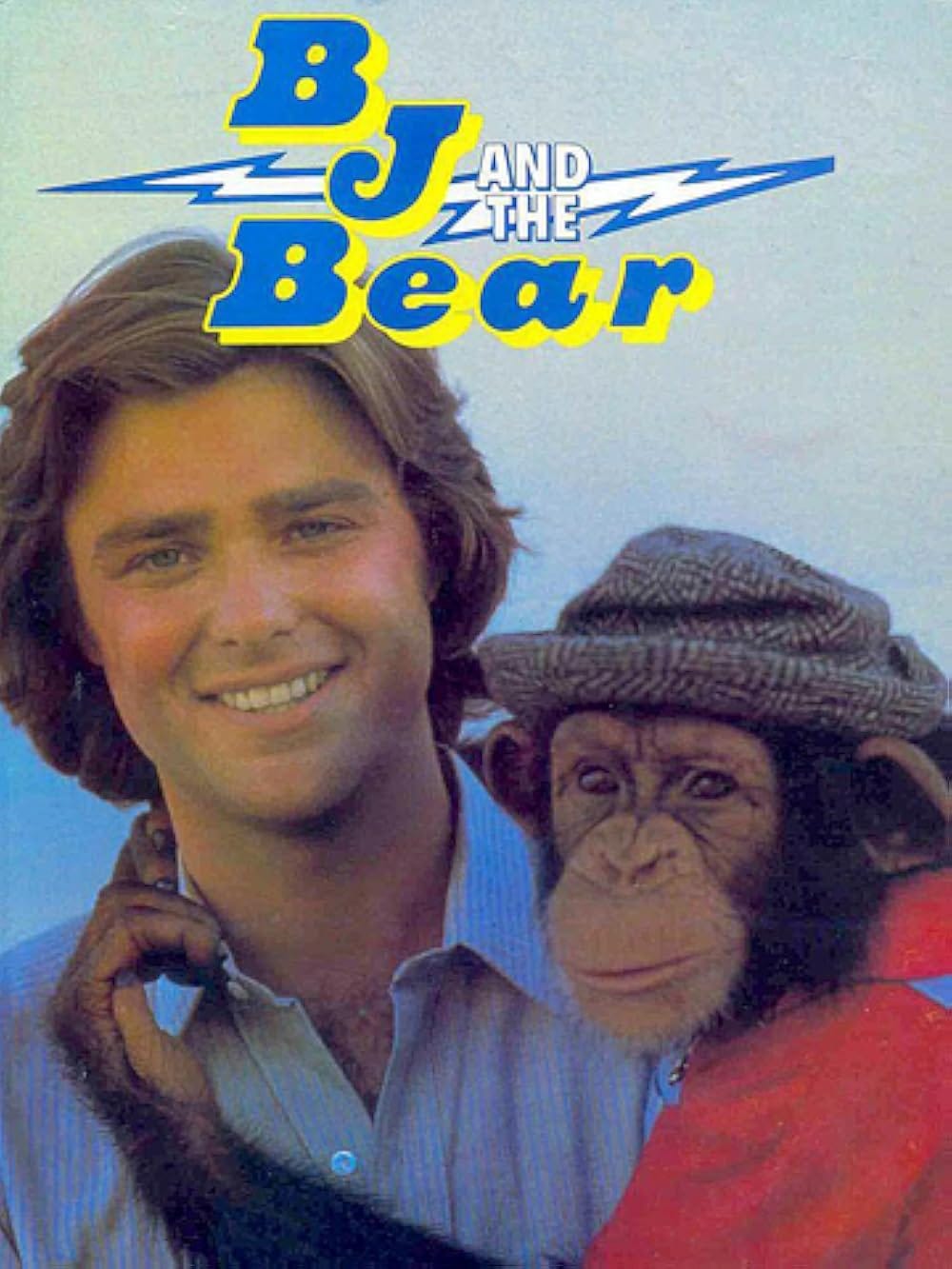
Straight up, I would have gone to see that shit in IMAX. Alas, it was left to Robbie Williams to attempt a chimp-themed pop-music biopic, with last year’s Better Man. It bombed so hard that Robbie Williams is in British witness protection and anyone proposing a chimp movie now is going to get blacklisted like Dalton Trumbo.
That’s a shame, because apes have a proud legacy in American pop culture. For our sins, Michael is the biopic we’re getting. But I think Bubbles is the biopic a damaged and hurting nation deserves.
The New York Times story linked further down in this piece also covers how the Jackson estate forced HBO to pull Leaving Neverland:
In 1992, [HBO] aired a film of a Jackson concert in Bucharest, and the contract it signed included a nondisparagement clause. The estate’s lawyers used a novel reading of that clause to reach a legal settlement in 2024 with HBO. “Leaving Neverland” is no longer available on its streaming service. Asked to comment on the dispute, an HBO spokeswoman said, “It was resolved amicably.”
Even the tents and merit badges context has proven repeatedly problematic.
“Wanna Be Startin’ Something,” if you’re wondering. It’s a bop.
I wonder if Michael Jackson is too far in the rearview mirror for the audiences that are the targets of Big Music. Remember during COVID when Big Entertainment was looking for things to show us, Big Sports hit on the idea of showing great games from the past, and a generation of young people decided that "Michael Jordan was pretty good"? [face palm] I wonder, if you ask 1,000 people under 30 around the world who Michael Jackson was, how many can deliver a reasonable answer? This biopic feels sort of echo-chamberish (stans gonna stan, and those who object are gonna object).
But also, I was surprised you didn't mention Clint Eastwood's orangutan pix: "Every Which Way But Loose" (1978) and its sequel, "Any Which Way You Can) (1980), plus of course "King Kong", "Planet of the Apes" and – unforgettably – Ronald Reagan in "Bedtime for Bonzo"!
I come down on it the same way as you - no to the film, but okay, acknowledging the reality of what I'm doing, to some of the music.